
After orthodontic treatment, retainers play a vital role in protecting your new smile. Wearing your retainer as advised helps ensure the results you’ve worked hard to achieve last for the long term.
Retainers are custom-made orthodontic appliances designed to hold your teeth in their new positions after braces or aligners are removed. Teeth naturally try to move back over time, so retention is essential to prevent unwanted shifting and to maintain the alignment achieved during treatment.
At Shrewsbury Orthodontic Centre, we offer several types of retainers to suit different needs and lifestyles.
Vacuum-formed retainers are clear, removable, and discreet, making them a popular choice. Hawley retainers use a combination of wire and acrylic and are durable and adjustable. Bonded retainers are fixed behind the teeth and provide continuous retention without the need for daily removal. Your orthodontist will recommend the most suitable option based on your treatment and bite.
| Comparison | Hawley | Bonded/Wire | Vacuum-Formed |
| Appearance | Acrylic base with a thin metal wire across the front teeth | Thin wire bonded behind the front teeth | Clear, slim plastic tray that fits over the teeth |
| Visibility | Wire is visible when smiling/talking | Hidden behind teeth | Generally very discreet |
| Comfort | Bulkier than clear retainers but adjustable for fit | No need to remove; may feel noticeable initially | Smooth and lightweight, though it can feel tight at first |
| Durability | Robust and typically longer-lasting; can be repaired/adjusted | Long-lasting, but can debond or distort if bitten on/hard foods | Can crack/warp over time, especially if exposed to heat |
| Maintenance | Brush the retainer and soak periodically; keep the wire clean; store in a case to prevent damage | Requires excellent cleaning with floss threaders/interdental brushes; regular checks to ensure it’s secure and hygiene is maintained | Rinse daily, brush gently with a soft toothbrush, avoid hot water, store in a case when not worn |
Retention usually begins with full-time wear, followed by a gradual reduction to part-time and then long-term night-time wear. This staged approach allows your teeth to stabilise while maintaining flexibility for everyday life. Your orthodontist will provide a personalised wear schedule and explain how to transition safely between stages.
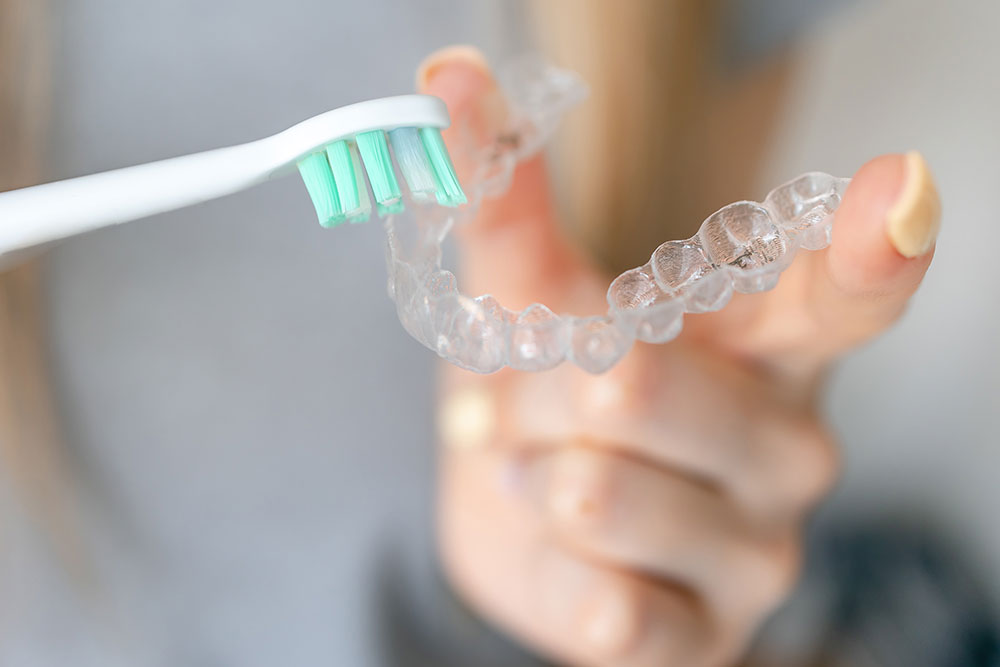
Proper care helps keep your retainer clean, comfortable, and effective. Retainers should be cleaned daily using gentle methods recommended by your orthodontic team and stored safely in their case when not in use. Avoid heat, harsh chemicals, and leaving retainers loose or wrapped in tissue, as this can cause damage or loss. Retainers do wear over time, and replacements can be arranged if needed. Find out more about caring for your retainers.
In many cases, retainers are included as part of your orthodontic treatment plan, but this can vary depending on the type of retainer provided. Replacement retainers are available if yours is lost or damaged, with typical charges explained clearly by our team or on our ‘Prices’ page. We recommend contacting the practice as soon as possible if a replacement is needed to prevent unwanted tooth movement.
Contact us to ensure your retainers are keeping your smile perfectly aligned.
Our experienced orthodontic team will assess fit, comfort, and effectiveness to help protect the results of your treatment.
After braces or aligners, teeth naturally try to move back to their original positions. Retainers help stabilise the teeth while the surrounding bone and tissues adapt, protecting the results of your treatment.
Most patients are advised to wear their retainer full time initially, then long term at night only. In many cases, wearing a retainer indefinitely is recommended to maintain alignment.
If a retainer is not worn as advised, teeth can gradually shift out of position. Even small changes can affect the appearance and function of your smile and may require further treatment to correct.
The most suitable retainer depends on your teeth, bite, lifestyle, and personal preference. Your orthodontist will recommend the best option, which may include removable or fixed retainers.
Retainers may feel tight or unusual when first worn, particularly after a break in use. This usually settles quickly as your teeth adjust.
Removable retainers should be cleaned daily using lukewarm water and a soft toothbrush. Fixed retainers require careful brushing and flossing, often using interdental brushes or floss threaders.
This varies by type and how well they are cared for. Removable retainers may need replacing over time due to wear or damage, while fixed retainers can last many years but should be checked regularly.
Contact the practice as soon as possible. Replacing a retainer promptly helps prevent unwanted tooth movement.
Yes. If a retainer feels tight, loose, or uncomfortable, an assessment can determine whether a replacement is needed.
Yes. Periodic reviews help ensure your retainer is still effective, fits correctly, and is not causing hygiene or bite issues.
Get in touch with us for a consultation and see what we can do for you!
By continuing to use the site, you agree to the use of cookies. You can change this and find out more by following this link